

How loot boxes are ruining games and making them unfair - watsonhicamen

IDG / Hayden Dingman
Supply Crates. Battlepacks. Nitro Crates. War Chests. Prize Crates. Card Packs. Pioneer Crates. Value Chests. Loot Boxes. Whatever you call them, they're the latest controversy to hit gaming. Not a late controversy by hook or by crook—these sol-called "gacha mechanism" give planted up in mobile games for most a decennary, been banned by a number of countries, and even made appearances on desktop. Valve's Team Fortress 2 has faced them since 2010, for instance.
But the discussion around loot boxes has become frenzied this past calendar month, thanks to three games in particular: Forza Motorsport 7,Middle-earth: Shadow of War, and Star Wars Battlefront II.
Let's recit their sins.
Wolf in wolf clothing
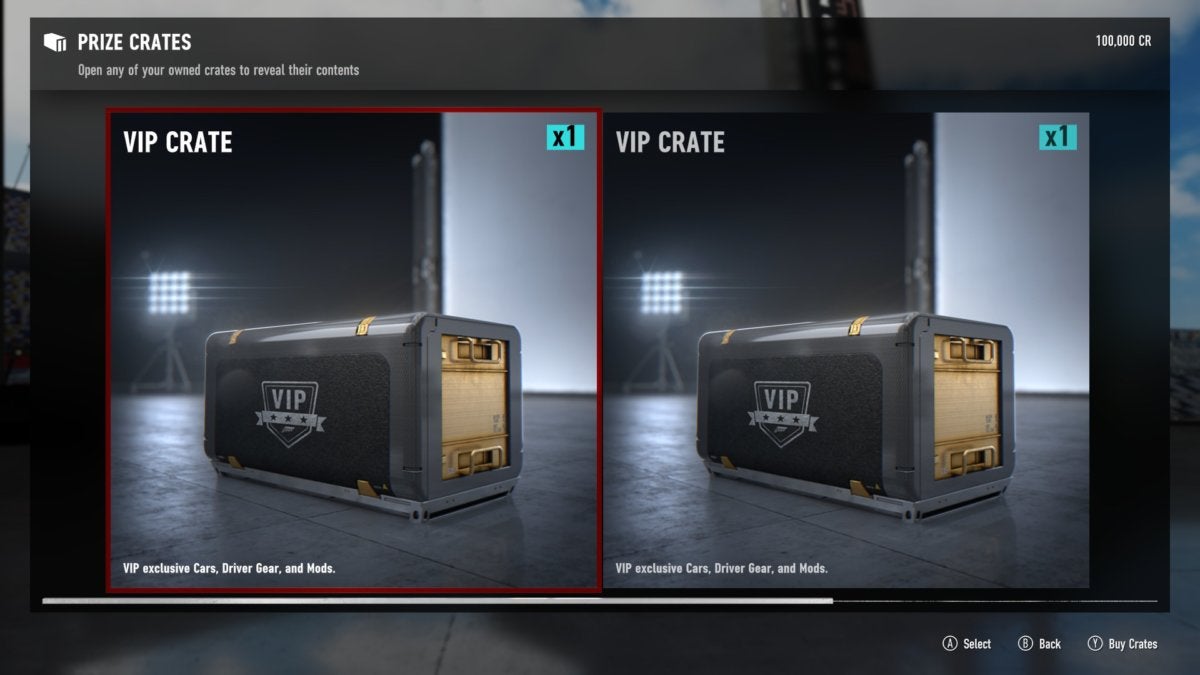
Forza Motorsport 7 ($60 on Amazon) old to feature a difficulty-based reward system. The more "Assists" you turned inactive (i.e. Throttle Aid, anti-lock brakes, the optimal path for your railcar to follow) the more credits you'd realize and the more cars you could purchase. This arrangement was dismantled in Forza 7, replaced with Value Crates and "Mods," or small-use cards that reward you for specific actions during a race. And an announcer that urges you to purchase aforesaid Prize Crates. The game was actively designed to costworse in order to drum in loot boxes.
 IDG / Hayden Dingman
 Microsoft also shortly killed the old Panjandrum system. Basically, those who bought High muckamuc in previous Forzas would always earn twice as many credits per race—a permanent paid frien, fundamentally. Kind of double-dyed, merely that's how it worked. For Forza Motorsport 7, Microsoft tried to replace this with quintet limited-function VIP cards, practiced for 25 races sum, where credits would cost doubled. Afterwards much outcry, this organisation was furled back and will eventually live replaced with the old 2X booster rocket.
Middle-worldly concern: Shadow of War ($60 on Amazon) goes one step further and sells you in-game items. These aren't too dissimilar from the microtransaction-expressive style boosters people take in been affected to accept in recent geezerhood, exclude for the fact everything you take in is random. Loot Chests, for instance, bug out out "two pieces of gear, including leastways one Rare." What pieces of appurtenance will those be? Nonentity knows! If you don't get what you need, you'll have to fall off more money into the damnable machine and hope your luck is better the second (or third, operating room fourth, or fifth) time approximately.
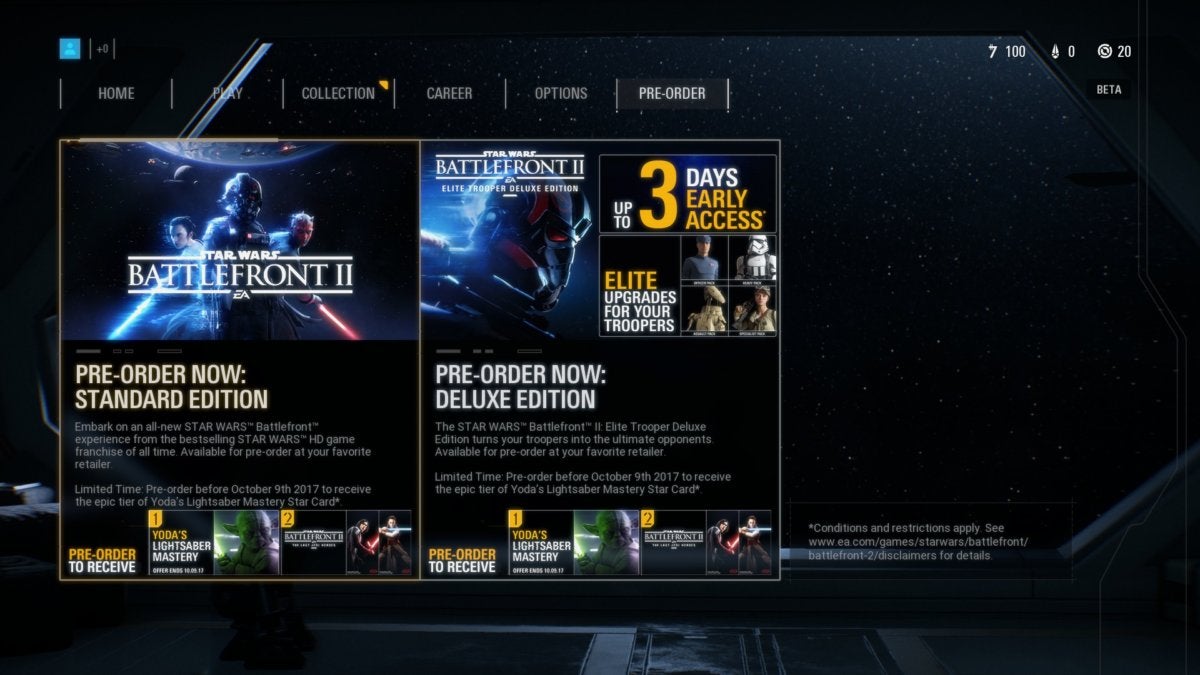
Star Wars Battlefront II ($60 on Amazon) is worst of all, though. Over the weekend EA ran Battlefront Cardinal's open beta/faux-exhibit, and it was the first chance for many to see how the new Star Card organisation works. In a word: Unwell.
 IDG / Hayden Dingman
 In the avant-garde 2015 Battlefront, Star Cards were expendable pieces of equipment you attached to your soldier to gain special abilities—a fomite-damaging ion shot, for instance, or a limited-use sniper rifle. Star Wars Front II features a sperm-filled class system however, and so this type of Hotshot Scorecard didn't make much sentience anymore. In that respect's nary use having a sniper rifle Star Card if you have a sniper course, after all.
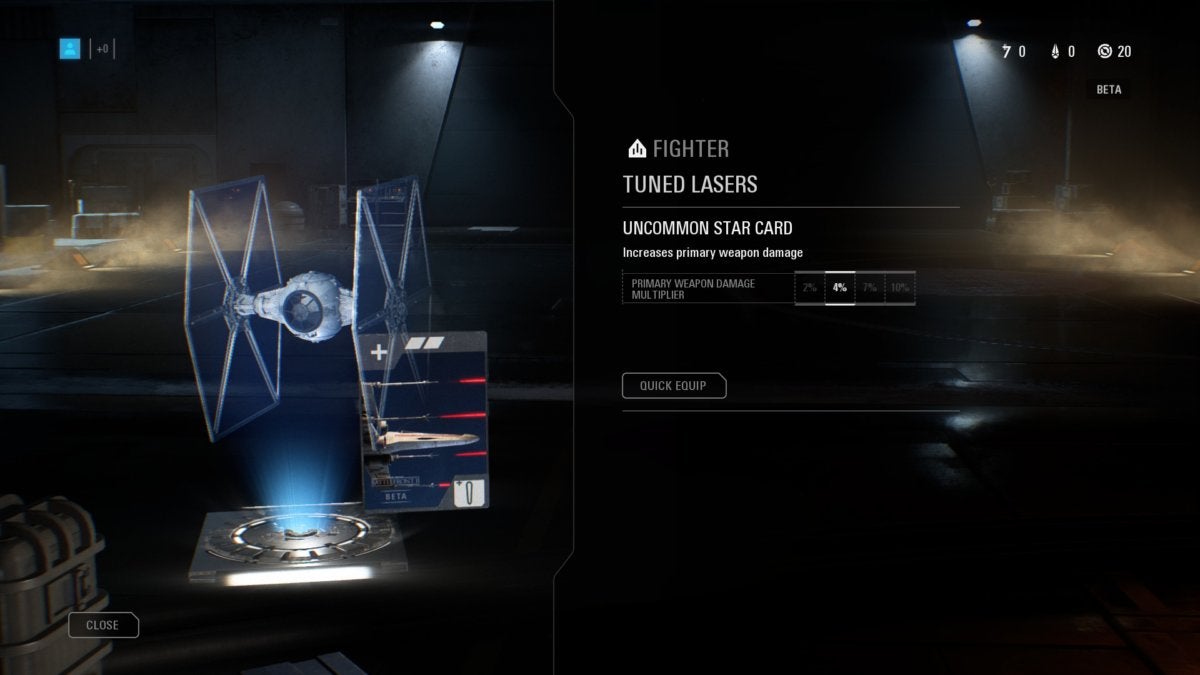
Certain Whizz Cards silence modify a socio-economic class's equipment—pronounce, replacing a grenade with a remote-detonated explosive—but the more problematic ones give direct boosts to a class. In space battles, for example, an X-Wing or TIE Fighter aircraft power bear a card that grants a two-percent weapon damage hike.
"Two percent? That doesn't sound that abominable," you might say—and you're right. Cards have tiers though, so while the "Joint" version of that card is a two-percent boost, the "Legendary" version of the same card is a big ten percentage. Yes, at any moment, any fighter you square remove against in a multiplayer match could have weapons that doh one-tenth more damage than you—and it's all based along haphazard fortune.
 IDG / Hayden Dingman
 Cards drop from wampu boxes, or "Starfighter Crates" as Front line calls them. (There are also "Trooper Crates" and "Allegiance Crates," plus "Daily Crates," which are rewarded for playing the game every day.) Cards are non rewarded based on the class you play out, and then if you'Ra unlucky you could end leading with a bunch of garbage for a class you ne'er touch. It also has made leveling meaningless—unequal Overwatch, there's no crateful honour for gaining a level, which is utterly bizarre.
Classes also make levels that are different from your own world tier. The catch: Classes only level up when you rich person a certain number of cards for them. If you have a full roster of cards for the "Assault" cavalryman course, for instance, you'll unlock extra slots to put those cards in—up to a tot up of three.
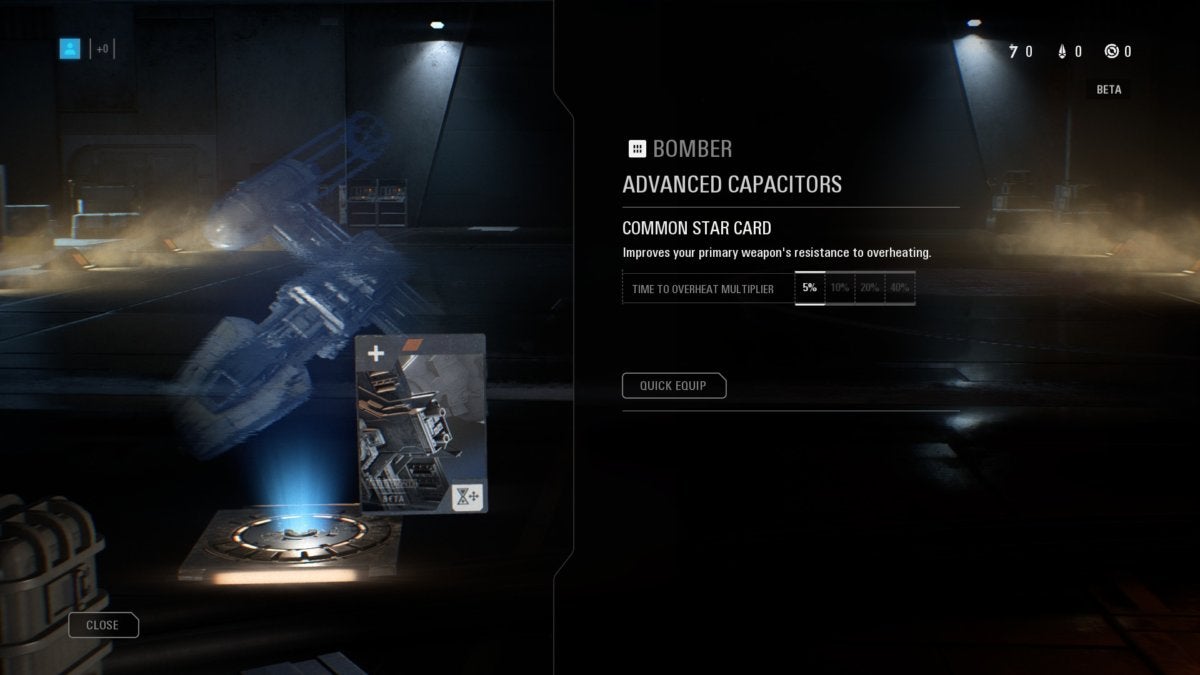
Because class levels are tied to how galore cards you have, and because more boxes means more than chances for cards, Ea is essentially giving mass a chance to buy their way to better equipment—non just opposite equipment, like in past Field games with their paid shortcuts, but straight-up better. We're talking a artillery that shoots 40 percentage longer without overheating, an officer socio-economic class that regenerates nearby allies' health with 40 pct less delay, abilities that refresh 28 percent faster.
 IDG / Hayden Dingman
 It's gross. Information technology's the exact same "Pay-to-Win" slippery slope hoi polloi feared would come to pass with microtransactions (and has touch on travel by in certain free-to-play games) but obscured behind an additional layer of pseudo-gambling. We can talk all you want about Overwatch and its loot boxes. In that location are some ethical concerns in that respect, too. Merely at least Overwatch is content to dole out mute (and unnecessary) cosmetics—costumes, badges, and so on. If you catch a bunch of costumes for a character you never play, well, none loss actually. IT doesn't affect the game.
But Front II? It's a new low.
I empathise where the trouble lies. Games are expensive, the $60 price give chase hasn't accumulated in years, and monetisation is hard—double so as the industry's previous golden goose of season passes dies a slow death. It's not that I don't know why loot boxes are an attractive option, nor that I'm unsympathetic to publishers trying to figure out where to go next.
Loot boxes aren't the proper solution in most cases, though. More than DLC, more than flavour passes, this latest trend has the potential to cause real damage to games, to ruination entire swathes of the industry. Information technology will labour off old fans, it bequeath fail to convince new ones, and all because a small subset of high-salaried "whales" (to use the industry's nomenclature) get guns that shoot better than the reside of us.
Fated to repeat
Which brings Pine Tree State to my point: This is the "vote with your wallet" moment, and we are going to fail. Historically, that's how this goes. We had the unplanned a decade ago and we screwed it up. As expansions died murder and games were diced up into increasingly smaller bits and bobs, as the manufacture was inundated with represent packs and microtransactions and pre-order bonuses and season passes and this labyrinth of post-purchase purchases, we could've said no. We should've been louder in our dissent.
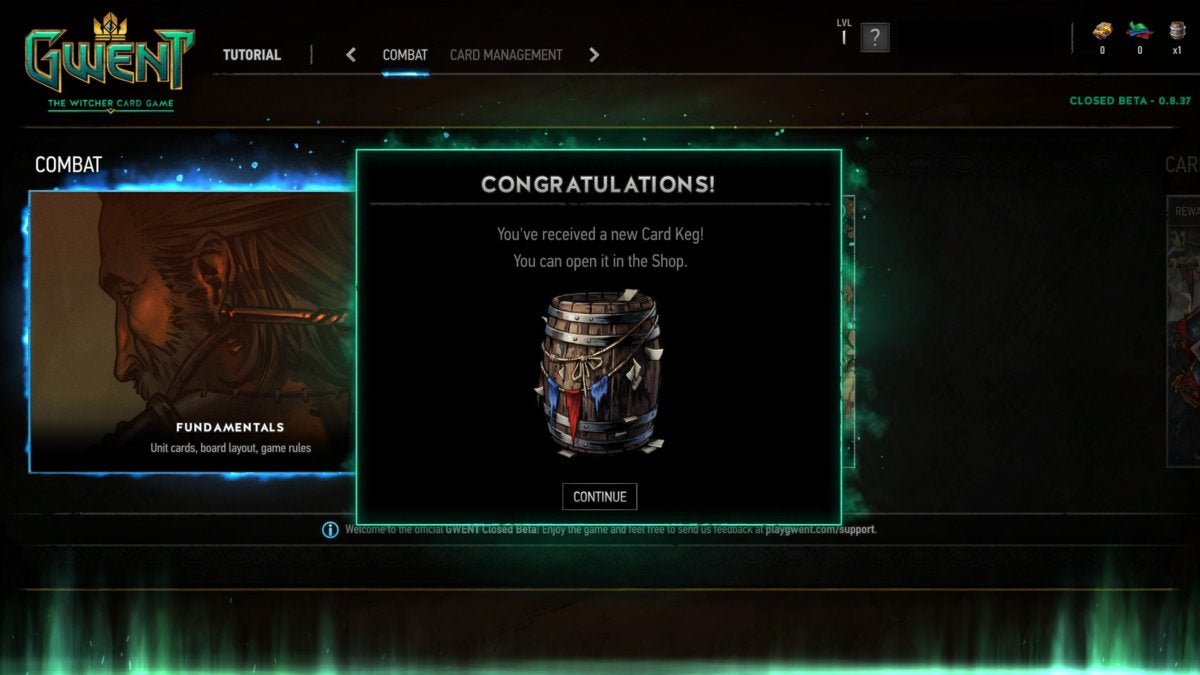 IDG / Hayden Dingman
 We weren't, and it's been a decade of exploitation. It's been sawbuck armor. It's been map packs going from $5 to $10 to $15 to $20. Mollify passes costing about as much as high games and then rarely (read: never, unless you're The Witcher 3) delivering connected their promises.
It's been miserable.
And now the chance has roll around again. The last six months bear shown that loot boxes are the future, if we're complacent. And not just the mostly harmless Overwatch mode. Those are still a trap, but at to the lowest degree they sanitize the spike match before they drop you into it.
Forza 7, Tincture of War, and Star Wars Front line II are proof: If you wear't push back, you will get ahead the worst publishers have to offer. You will stupefy pay-to-pull ahead multiplayer. You will start out I-player games balanced around grinding for loot boxes. And certain, games will mask that fact. They'll come down just barely on the proper English of the line. They'll keep the percentages midget—a 10-percent boost to damage, et cetera—to provide plausible deniability, to point to and say "Course our games aren't skewed toward people who spend money! We're gamers too! We prioritize merriment."
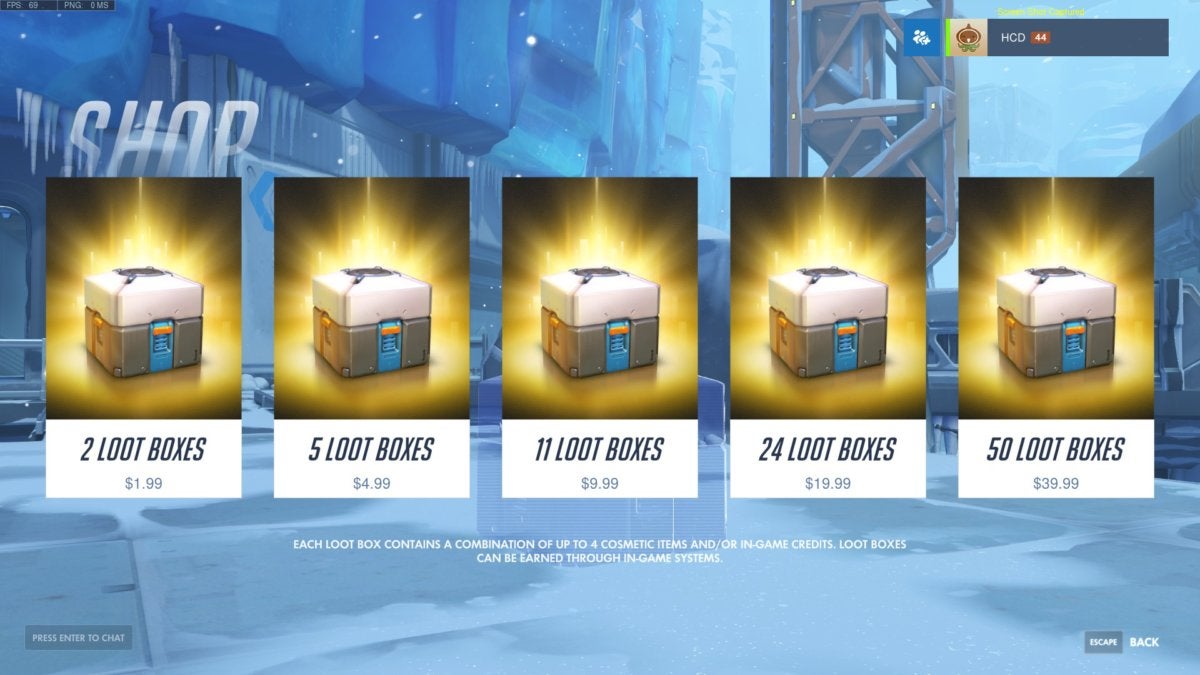 IDG / Hayden Dingman
 Simply sound down, you'll know better. You'll feel the Hand of the Market at play, meddling in the game, devising it just tedious sufficient to tempt you. I have intercourse I've matte it with microtransactions. I have no reason to suppose loot boxes aren't a more dangerous version of the same idea. And perhaps you don't care about Star Wars, Lord of the Rings, or fancy cars, just I guarantee your favorite series (or maybe second-favorite series) is next. It's only a matter of time with these things.
Bottom line
We credibly won't stop it. Let's be real, the number of people who care about video games enough to follow news? A small percentage. And that goes replicate for a game with panoramic appeal alike Battlefront II. Non only is it a damn good gamy at heart, but multitude see "Star Wars" and they buy it. Dozens of terrible Star Wars games have capitalized happening that mindset for decades now. Disney and EA are smart to engraft this terrible system in Battlefront, because the likeliness people will in reality vote in with their pocketbook, really abstain from a purchase? Low-toned. Too double-bass to be a real factor.
Again, history bears this out. We possess DLC. We have microtransactions.
But this is still your best chance.
Notation: When you purchase something after clicking links in our articles, we may earn a inferior commission. Read our consort link policy for more details.
Hayden writes about games for PCWorld and doubles as the nonmigratory Zork enthusiast.

Source: https://www.pcworld.com/article/407482/loot-boxes-ruining-gaming.html
Posted by: watsonhicamen.blogspot.com
0 Response to "How loot boxes are ruining games and making them unfair - watsonhicamen"
Post a Comment